
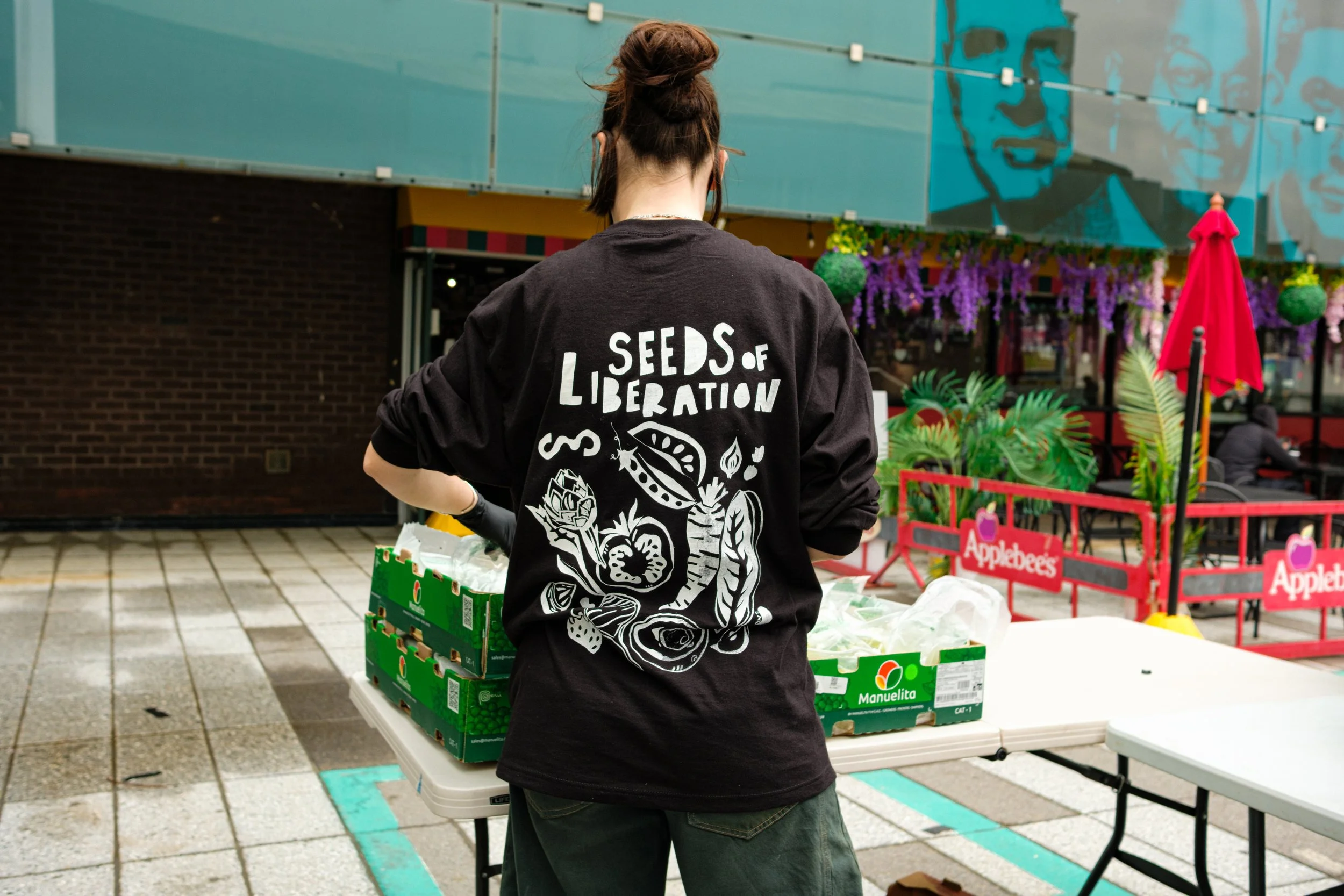
Our story
Seeds of Liberation came to be in the Summer of 2020 when a group of organizers and community members came together to solve our people's immediate needs. With the COVID-19 pandemic showcasing how truly unsupported the people of Brooklyn were by their local government, we decided to address an issue close to us all, food insecurity.
When we found ourselves protesting for the lives of Breonna Taylor, George Floyd, Ahmaud Arbery, Botham Jean among dozens more, we recognized not only was the list of names continuous but we needed to start at the nucleus of our communities. Without sustenance, how can we fight our oppressors and establishments that seek to displace and erase us?
Seeds Of Liberation was created as a direct action to combat white supremacy in our neighborhoods throughout Brooklyn and beyond.
Goals
Food Justice
Access to food and clean water is a fundamental human need. Without it, individuals are limited in their ability to care for themselves, support their families, or fully participate in their communities. Food and water insecurity shape daily decision-making, impact physical and emotional well-being, and affect every aspect of life. We understand the eradication of hunger as essential to collective liberation and a core pillar of our abolitionist work.
01
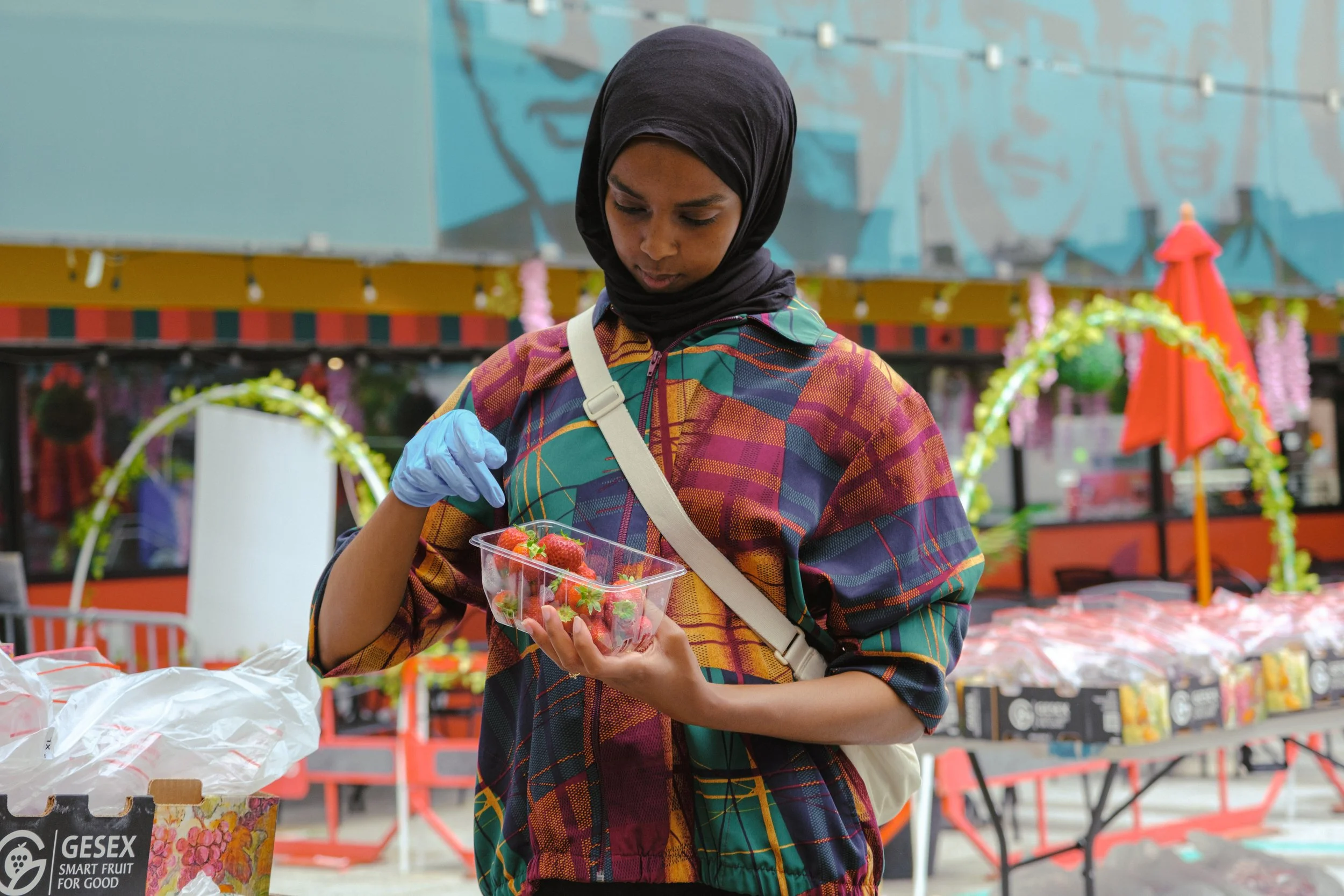
Effective liberation work requires more than organizing alone—it demands sustained, collective action. Our work spans direct service and community-led initiatives, including food distributions, campaigns to hold elected officials accountable, neighborhood cleanups, community fridges, free educational programming, and Narcan training. Through these efforts, we translate values into practice and work toward collective freedom, safety, and care for all.
02
Direct Actions
Accessible Education
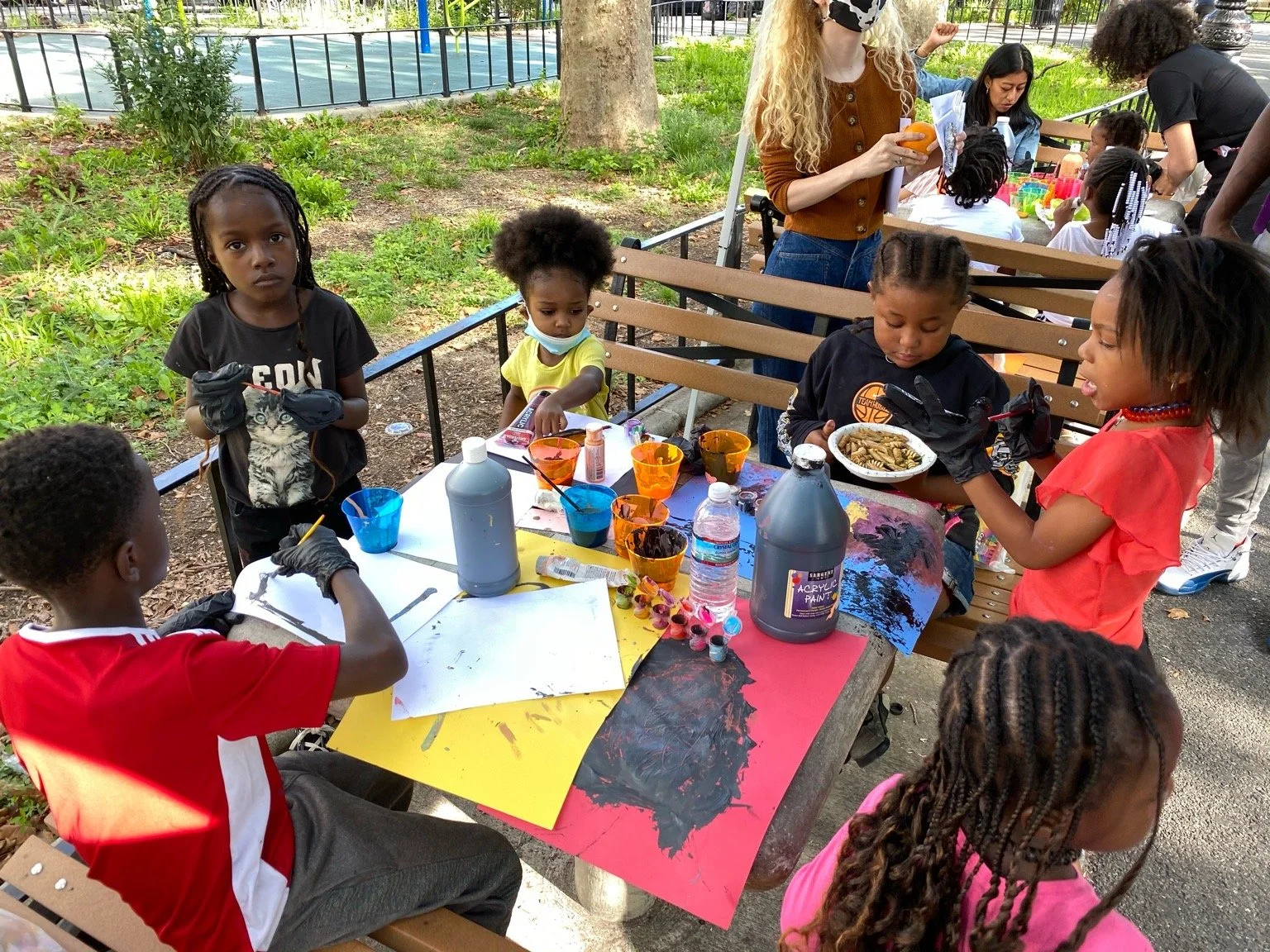
In conversations about liberation, it is important to acknowledge that many people are systematically denied access to the information needed to understand the forces that shape their lives. Marginalized communities are often positioned against one another, while institutions restrict access to critical history, political education, and cultural knowledge—frequently through cost and other structural barriers. We are committed to removing these barriers by providing accessible arts and political education. Through our no-cost and sliding-scale programs, we ensure that low-income communities, particularly ESL speakers and immigrant communities, can access the tools, knowledge, and resources necessary for self-determination and collective liberation.
03
Meet the Team
-
Aliffer Zamira Sabek
Founder & Executive Director
-
Sonnet Carter
Organizer & Educator
-
Darah Martin
Events
-
Joey Wong
Development
Get in touch
Photos by Devon Smith Jr and various photographers